ASH TREE PUBLISHING
Women's Health, Women's Spirituality
P.O. Box 64, Woodstock, NY 12498 USA
Phone/Fax 1-845-246-8081
Ash Tree Publishing
Common Herbs for Natural Health
by Juliette de Bairacli-Levy
Introduction
Herbal medicine is man's rightful medicine: The powers of herbs cannot be denied. From the days of the early caveman to the present time when human beings are soaring to the moon, people have used herbs to promote and safeguard health, and to heal disease. Herbs have also been used very successfully for healing the ills of those animals which man has domesticated.Some of us have special skills with herbs, and we call ourselves herbalists. This skill is an inheritance and is also highly developed amongst the wandering people of the world, especially the Gypsies, Bedouin Arabs, and the American and Mexican Indians (nomadic people known to me, and there are many others in lands to which so far I have not traveled). I have sought herbal knowledge from those wandering tribes, living with them and loving them, and much that I have learnt can be found in this book, and in my earlier herbal for farm and stable animals.
This twentieth century has seen a universal revival of and interest in herbal medicine. For herbal remedies were fast fading from memory: Thirty years ago, when I began writing about herbs for veterinary use, I was quite alone; now thousands are at my side. Further, herbs are to an increasing extent coming back into orthodox medicine. Many have always held their place there.
Mankind cannot forsake herbs. They are promised in the Bible to the human race, and that promise is well known, for it is proudly quoted in almost every herbal. In the Old and New Testaments there are over a dozen mentions of herbs or medicinal trees of value to mankind, for food or medicine. That out forefathers valued an herb garden is shown in Ahab's plea to Naboth (I Kings 21:2): "Give me thy vineyard that I might have it for a garden of herbs, because it is near unto my house."
Man can never excel Nature in medicine manufacture, for she makes the best ones. There is an herb or several herbs to cure or relieve every ailment of man and animal, bird and insect; and herbs applied to agricultural practice will even cure crops of their diseases.
The human race should make a study of herbs and not be content to remain ignorant of a medicine which is man's rightful inheritance, and which has only become lost to men through their ignorance and laziness and their departure from natural living. People should not be content to pay high prices for chemical medicines, which are seldom beneficial to the human body because they are unnatural, and which are very often harmful, their total effects being unknown. Instead they should learn to know the wild medicinal plants — the herbs — which are free for the gathering. Teeming in the countryside, the world over, are medicinal herbs and edible plants; it shows disbelief in the power of God to pass them by.
My two children, now grown up, have never had other than herbal
treatments in their lives, and have always taken an abundance of wild herbs and fruits in their daily diet. They are both Nature children, enjoying rugged health. When my son was a child, in Spain, his leg was cut almost to the bone by jagged blocks falling from a newly built wall. I healed this injury speedily, using only rosemary. Rosemary has remained my favorite herb ever since; I use it more than any other herb and cultivate it wherever I live. It was also a favorite of a queen of Hungary, and a lotion from it was known to the Gypsies as "The Queen of Hungary's Water." It was sold by Hungarian Gypsies on their far travels and won worldwide fame for its healing properties.In Israel, where I have lived for many years, I have learnt to make much use of Rue. Its medicinal properties have proved so excellent in my herbal work that I understand why Mahomet chose this herb for his blessing and why Arabs everywhere plant it in their gardens to protect their homes against "the evil eye."
My present work is largely in agriculture, and the use of herbs has given me crops and trees of exceptional health and size, which have attracted the interest of the experts and brought me encouragement from those who believe in natural agriculture. Also by growing bee herbs I have kept my hives of bees entirely disease-free in a region where that lethal bee disease, foul brood, has been rife and very close to my hives.
My publishers have asked me to write this herbal for general human use, following my several herbals on veterinary medicine, and have left me entirely free to decide as to the kind of herbal to be written.
All the herbal treatments in this book are safe and well proven. The poisonous herbs (which also have their uses) I have not included in this book, as in most cases there are similar non-poisonous herbs which can be employed in their stead. The same applies to the recipes. I have only included simple ones with ingredients easy to obtain.
For those readers interested in a more detailed study of herbs and herbal treatments, and in the use of trees in medicine, I have my veterinary herbal for farm and stable, with over seventy pages of materia medica. All those veterinary treatments can be applied for human use, and have been so applied through many years. That book, Herbal Handbook for Farm and Stable, is published by Faber and Faber. It is in most libraries for those who want to see what it is about. I was happy and surprised to obtain a good review of it in such orthodox publications as The Farmer's Weekly and The Field (of England).
In this present book are included many new medicinal herbs and herbal treatments of my own discovery, and hitherto unpublished ones that I have collected on my travels. I hope that it may help newcomers to herbs to discover the wonder of herbal medicine. And I hope that for those who already possess herbal knowledge it may provide a little that is new, and help to strengthen their faith and pride in this great and ancient form of healing.
Juliette de Bairacli Levy
Return to Juliette's homepage
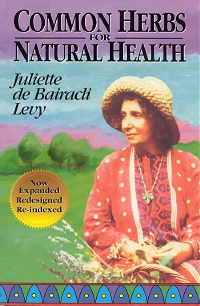
Common Herbs for Natural Health
by Juliette de Bairacli Levy
Foreword by Rosemary Gladstar
Paperback - 236 pages
Published by Ash Tree Publishing
ISBN: 0-9614620-9-4
Retails for: $15.95Common Herbs for Natural Health includes: lore and uses for 200 herbs including cosmetic, culinary, and medical recipes. Juliette de Bairacli Levy is famed for her mastery of herbal lore and her many books on living in tune with nature. Re-indexed, re-designed, and expanded.
"This is the book that got me started in herbal medicine.
It's solid gold; not only useful but incredibly fascinating." Susun Weed
A Gypsy in New York
Author: Juliette de Bairacli Levy.In this richly detailed memoir, Juliette de Bairacli Levy – one of the founders of American herbalism – offers us a rare documentary. It is at once an herbal, a travel book and a compendium of Gypsy lore and Gypsy ways. 210 pages, index, illustrations.
Retails for $21.95buy A Gypsy in New York in our Bookshop
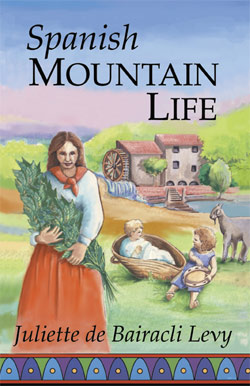
Spanish Mountain Life
Author: Juliette de Bairacli Levy.This jewel-like memoir by noted herbalist and traveler Juliette de Bairacli Levy details her personal struggle against typhus fever, during which she gave birth to her second child, Luz, who had to be suckled by a nanny goat. As ever we are embraced by Juliette's love of nature and animals, and welcomed onlookers as she relates with people whose lives are far different from ours. 114 pages, index, illustrations.
Retails for $16.95buy Spanish Mountain Life in our Bookshop
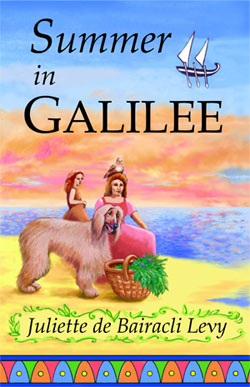
Summer in GALILEE
Author: Juliette de Bairacli Levy.Join Juliette de Bairacli Levy – Gypsy herbal veterinarian and mother of two toddlers – as she spends an eventful summer swimming in the waters, and the history, of the Sea of Galilee, in the modern state of Israel. Juliette trains her observant eyes, and lovely descriptive prose, on the people, places, plants and animals around her. 240 pages, index, illustrations.
Retails for $24.95buy Summer in GALILEE in our Bookshop